

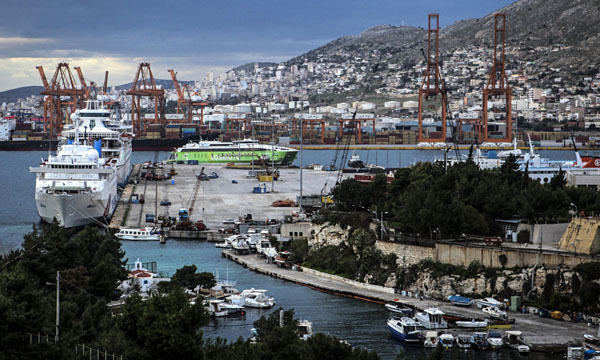
The terms port, harbor and haven are more or less synonymous, but each of them also has specific meanings.
A harbor is a place of security and comfort, a small bay or other sheltered part of an area of water, usually well protected against high waves and strong currents, and deep enough to provide anchorage for ships and other craft. It is also a place where port facilities are provided, e.g. accommodation for ships and cargo handling facilities.
The term port or seaport normally includes the harbor and the adjacent town or city suitable for loading goods and embarking men. A haven is a type of harbor used in literature or in names and adds the idea of refuge. Ships are accommodated and handled, i.e. loaded and unloaded, at such port structures as; wharfs or quays, piers and jetties, and sometimes alongside moles or breakwaters.
A dry dock is a type of dock consisting of a rectangular basin dug into the shore of a body of water and provided with a removable enclosure wall or gate on the side toward the water, used for major repairs and overhaul of vessels. When a ship is to be docked, the dry dock is flooded, and the gate removed.
Wharf is the oldest term in English referring to port structures. It denotes any structure of timber, masonry, cement, or other material built along or at an angle to the navigable waterway, with sufficient depth of water to accommodate vessels and receive and discharge cargo or passengers.
Quay is a construction work extending into the harbor with sufficient depth of water alongside to accommodate vessels, also used as a promenade or landing place for passengers. A jetty is a small pier, usually made of timbers for boats, yachts or fishing boats, but it also refers to large ships. A dock is a place, usually man-made area of enclosed water, where ships are loaded, unloaded or repaired. Originally, it denotes an area of water that can accommodate a ship and can be closed off by locks to allow regulation of the water level. It also means a space between two wharves or piers for the mooring of ships.
When you know, rubber fender is definitely a crucial portion of any dock or harbor facility. Docking a ship is surely an imprecise make a difference and rubber fenders must be in place to help keep ships from currently being broken by bumping, scraping or crashing into docks. From the same token, the docks on their own must remain secured from injury by ships. Rubber fenders also arrive into perform to stop injury from ships coming into contact with one another. Each vessel from the enjoyment craft to a fishing boat to a supertanker demands fenders; each construction from the dock to some bridge to an oil rig does, too.
Contact Us
Feel free to contact us if you have any comments or inquires and one of our skilled staff representatives will contact you within the next business day.